
AS app makers hold off Windows Phone struggles to break catch 22
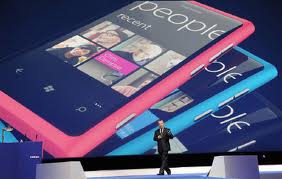
Finland, Mar 26 Apps, apps, apps! That is the main challenge that Microsoft and Nokia, who are trying to claw back market share from Apple Inc's iPhone and Google's Android in the red hot smartphone market, face now. And so far the going does not look too good for the challengers and their warhorse Windows Phone platform.
Online advertising spend nears £5 billion
London: Brands in Britain spent almost 5 billion pounds ($8 billion) advertising online in 2011, with video ads and marketing on social media platforms driving growth to its biggest increase in five years against a weak economic backdrop. Britain has led the way in moving advertising money to the internet from traditional media such as newspapers and radio and the latest report by the Internet Advertising Bureau (IAB) put growth for 2011 up 14.4 percent, with a similar rate expected this year.

Tough times in the US China iPad smuggling game
San Francisco/Hong Kong: Early on the morning of March 16, Wong Tat joined a line of about 100 people waiting for the launch of the new iPad in a chilly rain outside an Apple store on the outskirts of San Francisco. When the doors opened, he was among the first to buy his quota of two iPads - the maximum Apple Inc allows per person. Then, sporting a bright red cap for easy identification, Wong began to direct a stream of people toting their new tablets to a silver Mercedes SUV in the parking lot.

Nokia's Lumia 900 A good high end smart phone with relatively few compatible apps.
The Lumia 900 is proof that although Nokia and Microsoft teamed up under duress, as their competitors forged ahead to redefine mobile computing, the partnership makes sense. Nokia has built a high-quality and striking handset, and Microsoft has made a refreshing and likable operating system to run it. Unfortunately, the apps to run on that OS are in short supply.
Tuesday, August 27, 2013
 4:52 PM
 Etech4future

Thursday, April 19, 2012
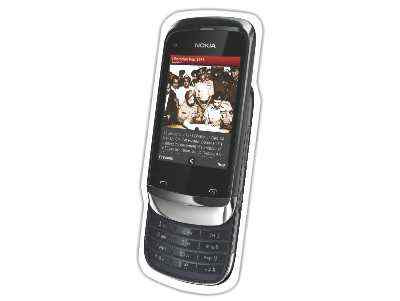
First Intel based smartphone to go on sale in India tomorrow


Subaru launches iPad brochures for its 2012 vehicle range

As you can imagine, each app rocks fully photographic exterior and interior 360-degree views that also allows you to experiment with paint colors and interior trims. Moreover, there are interactive feature demos, videos and comprehensive specifications.
The 2012 Subaru model iPad apps build on the Dynamic Brochure program, which Subaru debuted in 2011 to give audiences more engaging choices for information, comparison and sharing. At the same time, the program also supports Subaru commitment to environmentally-friendly practices by reducing paper usage, energy consumption, inks, and production waste.
LG Optimus Elite joins Sprint’s and Virgin Mobile’s eco friendly range

As for the specs, the Optimus Elite rocks a 3.5-inch screen, 800MHz processor, 5-megapixel rear-facing camera with flash, 3G and Wi-Fi connectivity with mobile hotspot, GPS, and NFC with Google Wallet support.
Sprint will begin taking orders for the new phone on May 18th in-store, with online orders starting on Earth Day, April 22. The price is $29.99 after rebate and with a new contract. Timing and pricing for the device on Virgin Mobile USA will be announced shortly.
Giveaway: Samsung Galaxy S II Epic 4G Touch and Motorola PHOTON 4G

As you probably already know, this month (April 1-28) is RadioShack's Mobile Makeover Month, which aims to help you get rid of some unused technology by guaranteeing a minimum $30 (and a maximum $300) trade-in value for your old phone, upon purchasing a new one. Of course, you can trade-in all kinds of working gear: phones, cameras, MP3 players, etc., so you not only get rid of old tech and make a few bucks along the way, but you also help keep the environment clean. You can trade your old device in at a retail RadioShack location, or online here, where you can also determine the value of your device. By the way, RadioShack is also organizing sweepstakes through Facebook and Twitter, where you can try to guess how much a given collection of old gadgets is worth, for a chance to win a $300 RadioShack gift card.
most anticipated laptops of 2012

With all the ultrabooks already confirmed for 2012, it's a fairly safe bet that your next laptop will be a very thin one.
Running from just under $1,000 to $1,500 or more, the 2012 laptops that seem the most exciting aren't exactly the least expensive we've ever seen, especially after several years of falling prices, but at least they all look good.
Our question for you is: based on design, price, components, and features, which of these highly anticipated 2012 laptops are you hoping to buy this year?
Below you'll find a brief executive summary of each one, linked to more in-depth coverage, with our take on why it's a lustworthy machine. Check out the contenders, then vote in our poll. Or, if you have a different choice, let us know in the comments section below.

Estimated price: $1,499, Q1 2012
The winner of our Computers and Hardware Best of CES category, this glass-covered beast is certainly unique. We're still not convinced a glass-lid laptop can survive in the wild, but the NFC support and great audio controls are big pluses.

Dell XPS 13
Estimated price: $999, Q1 2012
The look and feel remind us of Dell's corporate Latitude line spliced with a MacBook Air, rather than previous XPS laptops, and inside it has edge-to-edge Gorilla Glass over the screen and a large clickpad.

Estimated price: $999, Q2/3 2012
The S5 is 15mm thick--2mm thinner than last year's Aspire S3--weighs less than 3 pounds, and has a sleek Onyx Black magnesium alloy chassis. More importantly, the ports--HDMI, USB 3.0, and Thunderbolt--are tucked away via a motorized rear port door.

Samsung Series 9
Estimated price: $1,399, Q1 2012
Last year's big design winner was the ultraslim Samsung Series 9, which hit before anyone had ever heard of an ultrabook. This year's version is even slicker, but still on the expensive side for what you get.
6666666666666
Lenovo IdeaPad Yoga
Estimated price: $1,199, Q2/3 2012
Another laptop we'll have to wait for Windows 8 to get our hands on, the Yoga works perfectly fine as a standard clamshell laptop, but its lid flips all the way back to form a touch-screen tablet, providing extra flexibility (no pun intended) in how you use it.

15-inch Apple MacBook Air
Estimated price: $1,699 or more, sometime in 2012
A shot in the dark here, but there have been enough rumors and online chatter about a larger version of Apple's MacBook Air that it must be on at least some people's list of most-lusted-after laptops of 2012. If there is indeed a 15-inch Air, it could very well hit sometime around midyear, when the next generation of Intel CPUs is expected, and would most likely involve a decent premium over the existing 11- and 13-inch versions.
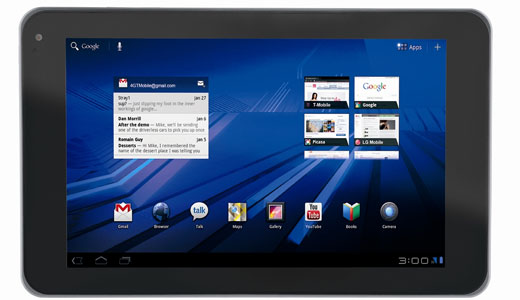
AMD Shows Brazos Powered Tablet Running Ice Cream Sandwich

Though AMD was not involved in porting Ice Cream Sandwich to the device and hasn’t announced an intention to support Android, a company rep said that the work Google has done with Intel on creating x86 compatible versions of its operating system makes this kind of port possible. If partners like MSI want to use AMD’s chips on an Android slate in the future, they may not even need much support from the chipmaker.
Toshiba Satellite P855 glasses free 3D laptop announced

Toshiba has also remade its trackpad to free up some space. The trackpad is actually bigger as it does away with buttons and brings click-down technology instead. Look ma, no glasses. Toshiba debuted its glasses-free 3D technology back in 2011, with the launch of the Toshiba Qosmio F750 3D laptop, which trumped Asus' effort and came first to market with the technology.
The laptop uses a lenticular lens sheet and 3D webcam technology which tracks your eyes, which realigns the 3D for wherever your peepers are looking. Although the Toshiba Satellite P855 series is a mid-range laptop, Tosh believes that it is powerful enough for budding movie editors and photographers. Toshiba has also announced the Toshiba Satellite P850 series, which is the same laptop but without the 3D capabilities. Price-wise, the Toshiba Satellite P855 series will be available from £599.
This week's hottest reviews on TechRadar

Dell XPS 13 review
There's only so cheap you can go with a thin and light chassis, Intel Core i7 under the hood, 4GB of memory and a 128/256GB SSD. Dell hasn't managed to make the XPS 13 as cheap as some competing Ultrabooks but this shouldn't be a message of doom and gloom - we think Dell will manage to bring prices down. And despite the price, we think the XPS 13 is the most desirable Ultrabook we've yet seen.
And, because of its corporate-friendly features we think it'll become a fixture in many boardrooms. But it's far from being just good for business. It's an excellent choice for anyone wanting a highly powered, highly portable machine. We've just found our next PC. How about you?
New iPad review
We think Apple's new iPad is magnificent. It's definitely the best iPad ever, with a brilliant new pin-sharp Retina display and more powerful graphics the stand-out new features. A consequence of these upgrades is that it's slightly thicker and heavier than the iPad 2, but if you want one of those, Apple is leaving the 16GB Wi-Fi model on the market.
Let's face it, though, you don't want one of those. You want one of the new ones, especially as the new iPad is only a little more expensive and offers a visual experience you have to see to believe. Apple's MO is evolution rather than revolution, so owners of older models need not worry - there's plenty of life in them yet. But for anyone else looking for a new play thing, this is it.
Philips Fidelio L1 review
Designed for use in the home as well as on the move, Philips is hoping the new Fidelio L1s will strike a chord with that rare beast: the iPod owner who really cares about sound quality.
A lot of the music we put through the L1 cans sounded absolutely stunning. Acoustic tracks sound first class across the board. The A-minor twang of a guitar, the snap of a snare drum, the wail of a Roger Waters – it's all as sonically pure as any other headphones we've tested in recent times. But for as many tracks as we could find that made the L1s sound like the best headphones in the world, there were as many that brought them back down into the realms of normality due to a lack of punch at the low-end.
Samsung Series 9 review
The Samsung Series 9 900X3B is a fantastic-looking laptop that doesn't sacrifice usability like many ultra-portable laptops. Yes, there's a lack of power here, battery life is uninspiring and the price is colossal. Those things usually equate to a bad review, but the Series 9 commands a certain respect. The engineering and vision that's gone into making something beautiful and unique goes beyond benchmark scores and gripes over price. We made excuses for the original Apple MacBook Air, which wasn't usable as a main machine.
Panasonic DMP-BDT220 review
While the DBP-BDT220 has a seductively low price, it's by no means a budget proposition. Panasonic has produced a high-performance Blu-ray player that doesn't disgrace itself when partnered with equipment from higher up the food chain.
New iPad 3 review

The design of the new iPad 3 isn't really anything different from the original duo from Apple's tablet range. Actually, while we're thinking about it, it looks almost identical to the iPad 2 – to the point you'd struggle to tell them apart when turned off.
The new iPad, the iPad 3, the new iPad 3 call it what you want, but it's a device that from the outside looks remarkably like the iPad 2 but with an overhaul on the innards.
The question most people ask us when it comes to the new iPad is: what's different from the old one?
Well, in this case it's pretty easy: there's a Retina Display that makes everything looks superbly crisp, an updated A5X processor bringing quad-core graphics and a 5MP camera on the rear with a VGA sensor on the front.
Oh, and the iPad 3 is also the device that brings iOS 5.1 to the masses (well, it's also on the likes of the iPhone 4S and iPad 2 as well, but hey, we're not reviewing those today, and you don't really care unless it's a new iPad.)
New iPad 3 review

The design of the new iPad 3 isn't really anything different from the original duo from Apple's tablet range. Actually, while we're thinking about it, it looks almost identical to the iPad 2 – to the point you'd struggle to tell them apart when turned off.
However, in the hand, there's a little bit of a difference, especially when it comes to the weight. The new iPad is nearly 60g heavier than the previous iteration, and while it's not terrible, it does add a little arm strain during a marathon movie session.
Retina Display
Before we get onto all the normal insight over the frame of the new iPad, it's worth talking about the main feature: the Retina Display.
Apple has packed a huge amount more pixels into the 9.7-inch screen - 1536 x 2048 to be exact. However, despite the fact that the Cupertino brand makes a big thing about the 330 PPI density of the iPhone 4, we're looking at a screen that's technically a lot less sharp than its smartphone brethren - around 264PPI.
Apple has got around this fact by stating that the screen is meant to be held at 15 inches from the face, rather than the 10 inches the iPhone is supposed to from your eyes, and as such the sharpness is the same.
Given the fact the term 'Retina Display' really isn't a legally binding term, we don't care. What matters is the effect - and it's one of the most impressive we've seen on a tablet to date. If someone took an iPad, printed out a really hi-res image of an iOS system and stuck it on the front, we'd struggle to tell the difference - it's superb, and even squinting up close you'll be hard pushed to notice any pixelation.
The colour reproduction will also appeal to many, as it's pretty close to reality - it lacks the punch of the Super AMOLED HD screens seen on the likes of the Samsung Galaxy Note for instance, but it will depend on personal preference as to whether that's a good thing.
We like the vivid colours of Samsung's screens, but we know plenty of people that loathe them too.
The main thing is things like internet browsing; photo viewing and movie sessions are all much, much improved over the iPad 2, and is one of the main reasons to pick up the new iPad.
Design.

The rest of the design is premium too - given you can be paying nearly £700 for a top end model, it needs to seem like a worthwhile investment, and it does.
The curved edges, the oleophobic scratch-proof glass and the aluminium chassis are all the kind of thing that some Android tablets have tried to ape and failed. Of course, many will prefer the feather-light frames of some of the Samsung models but, like the screen, it really comes down to personal preference.
The buttonry on the new iPad is pretty sparse though - we're talking four buttons and that's your lot.
The rest of the buttons are all clustered tightly together in the top left-hand corner of the new iPad, with the rocker/volume key, the mute/orientation switch and power/lock key all within an inch of one another.
Philips Fidelio L1 review

As soon as you take the L1 cans in your hand, though, you can tell that a lot love as gone into them - they're built to a very high standard indeed. They absolutely stink of premium, and they look like they mean business too - even your Grandaddy would like them, and he wouldn't look silly wearing them either.
But that's really not a hard feat to pull off if you're willing to invest a little money. Even Beats by Dre cans look and feel great to the touch. But it's what's inside a pair of headphones that ultimately dictates their worth and that's why we're torn with these Philips'.
A lot of the music we put through the L1 cans sounded absolutely stunning. Acoustic tracks sound first class across the board. The A-minor twang of a guitar, the snap of a snare drum, the wail of a Roger Waters – it's all as sonically pure as any other headphones we've tested in recent times.
Some of the tracks we used to test were revealed to contain instruments we never even knew to be in the mix – always a great indicator of quality.
The L1s love vocals in particular and do a great job of putting the vocalist right in front of your face. You don't need complex computer algorithms at the source to do that – it's all about care and passion in the design process. It's about driver design, materials and attention to detail.
Every sonic fibre is reproduced with a clarity you simply will not find anywhere under the £200 mark, and the better production values a track has, the better it will sound with the Fidelio L1s.

The Philips Fidelio L1 headphones represent the famous Dutch company's latest offering in the world of premium headphones.
Designed for use in the home as well as on the move, Philips is hoping to strike a chord with that rare beast: the iPod owner who cares deeply about clear, natural sound quality.
You only need to look at the number of people still rocking the bundled white earbuds to see that sound quality is simply not a consideration for the majority. And with celebrity-endorsed ranges like Beats by Dre occupying entire sections in highstreet shops and subsequently hoovering up a large portion of those people who think they care about sound quality (Beats by Dre are an expensive fashion accessory, they are not a serious audio product), there's not much room for manoeuvre for those products that do offer genuine performance.
As soon as you take the L1 cans in your hand, though, you can tell that a lot love as gone into them - they're built to a very high standard indeed. They absolutely stink of premium, and they look like they mean business too - even your Grandaddy would like them, and he wouldn't look silly wearing them either.
But that's really not a hard feat to pull off if you're willing to invest a little money. Even Beats by Dre cans look and feel great to the touch. But it's what's inside a pair of headphones that ultimately dictates their worth and that's why we're torn with these Philips'.
A lot of the music we put through the L1 cans sounded absolutely stunning. Acoustic tracks sound first class across the board. The A-minor twang of a guitar, the snap of a snare drum, the wail of a Roger Waters – it's all as sonically pure as any other headphones we've tested in recent times.
Some of the tracks we used to test were revealed to contain instruments we never even knew to be in the mix – always a great indicator of quality.
The L1s love vocals in particular and do a great job of putting the vocalist right in front of your face. You don't need complex computer algorithms at the source to do that – it's all about care and passion in the design process. It's about driver design, materials and attention to detail.
Every sonic fibre is reproduced with a clarity you simply will not find anywhere under the £200 mark, and the better production values a track has, the better it will sound with the Fidelio L1s.
But this sadly is where the L1s peak and start to show some imperfection. For as many tracks as we could find that made the L1s sound like the best headphones in the world, there were as many that brought them back down into the realms of normality.
The sticking point for us is the bass. While the soundscape in most tracks is handled with dazzling clarity, deep bass is often lost into the midrange, reducing the scale of the soundscape and mildly blunting the listening experience.
Philips has deliberately tuned them this way and many people will accept the compromise as worthwhile - they certainly can't be accused of exaggerating bass like many products do. But after the L1's went on a tour around the TechRadar office and across several of our partner magazine teams, the general consensus was that bass was a disappointment.
Take a track like Brothers in Arms by Dire Straits, a personal favourite (shut it, you). The beauty of that track is in the production. It's about as moody as '80s music gets and has been used to magic effect on the big and small screen over the years. But the L1's push all of those luscious deep notes into the background of the midrange and so the track loses its foreboding sense of atmosphere.
If the L1's were a Philips TV, they'd be a brand new 4K set with dazzling, detailed picture quality and resolution but with disappointing black levels.
It's not all doom and gloom at the bottom end though. The punchy bass drum in a track like Pink Floyd's Money is delivered with vibrancy. It's just the deeper, more subtle bassy undertones that can go AWOL and for many people that won't be a problem.
Verdict:
The Philips Fidelio L1 headphones are designed for the discerning listener more than the street-walking basshunter. If you want to look down with the kids and have your head blown off with bass and nothing else, Beats by Dre are more your bag. But the L1's are about taking music from its source and delivering it to your brain in the most natural way possible.
This may lead to a lack of immersion when it comes to really deep bass, but the clarity and detail on offer elsewhere in the soundscape will be enough for some to make this purchase worthwhile.
Ultimately though, we expected a slightly better all-round performance from a pair of cans that cost well north of £200. And that's why we've given them 4 stars only. If you can find them for cheaper, or if a bit of bass being shaved off the bottom end is not troubling to you, these could easily be the cans you've been waiting for.
Samsung Series 9 review

Wow factor and desirability are key to what Ultrabooks stand for, and this is also the ethos that has driven the Samsung Series 9's design. When closed, the laptop is just 14mm thick, and sits like a folded piece of paper on the desk.

At first the Samsung Series 9 900X3B intrigues onlookers, but the real appreciation is saved for when it's picked up. The Series 9 weighs just 1.2kg, making it lighter than the MacBook Air, and thinner too.
It's impossibly strong, and there's zero flex in any part of the lid and keyboard, something that the Toshiba Portégé R830 suffers from.
Any Windows laptop released at the moment will be immediately categorized as an Ultrabook, but Samsung has opted not to allow Intel to brand the Series 9 900X3B with its new category.
The Samsung Series 5 is the company's official Ultrabook, and while it's a solid performer, uninspiring looks and bland design only make the Series 9 more appealing.
Samsung wouldn't be cowed on why it rejected the Ultrabook moniker for its flagship product, but the company takes pride in its Series 9, which extends across TVs and other consumer electronics. With Samsung trying to carve out a brand identity, it wouldn't want the Series 9 to be diluted with third-party labels.
Naming conventions aside, the Samsung Series 9 900X3B shares all of the same technology with the Ultrabook crowd, which is growing on a weekly basis. There's a low voltage 1.6GHz Sandy Bridge processor with Turbo Boost, fast resume from sleep, long battery life and decent graphical power.
Panasonic DMP BDT220 review

Joining it in the range is the oddball DMP-BBT01, a compact designer player not much bigger than a couple of Blu-ray cases. Not that this model is carrying any surplus weight. It follows the full-width (430mm), half-depth (185mm) design which has become so popular with mainstream brands, and stands just 38mm tall.
One consequence of this half-deep design is that you can't sandwich it between other full-size 430mm components, it has to sit on top. Cosmetically, the deck is pretty anonymous. A full-width grey fascia flap conceals the loading tray, front-mounted USB port for media playback and SD card reader.

Dell XPS 13 review

While that's lighter than a great many ultraportables, it's not as floaty as some the Toshiba Z830 weighs in at 1.12kg for example - and there is a sturdiness to it that makes it feel solid. Conforming to the design restrictions laid out by Intel for the Ultrabook format, the XPS 13 measures 7mm at its thinnest point and 18mm at its thickest.
The first thing that strikes you about the XPS 13 is how compact it is. Despite it being a 13-inch display, the 31.6 x 20.5 cm footprint is narrow and Dell makes no secret of its desire to be smaller than the 13-inch MacBook Air but with a similar screen size.
It really is a gorgeous-looking device. Our previous Ultrabook design best has to be the Asus Zenbook but the Dell XPS 13 really cuts it. It looks the part and feels it too at 1.4Kg.
While the XPS 13 will undeniably appeal to the consumer, Dell also hopes to capture a large part of the business market for Ultrabooks there are enterprise friendly features such as a Trusted Platform Module for BitLocker Data Encryption and after-sales ProSupport service.
HP reveals first Ivy Bridge laptops

All three include the new, third-generation Intel i7 processor, known as Ivy Bridge, with varying screen sizes and storage options. The DV4-5000 will have a 14-inch screen with a 1366 x 768 resolution, along with up to 8GB of RAM, a 1TB hard-drive and an NVIDIA GeForce GT 630M graphics card.
The DV6-7000 has a 15.6-inch screen which improves resolution to 1600 x 900. It boasts the same speed processor, again with 8GB of RAM and the same graphics card. Hard drive space doubles to 2TB
The final model, the DV6-7000 also rocks a 15.6-inch screen, the same storage and RAM, but with a slightly faster version of the i7 processor (2.6GHz compared to 2.3GHz on the other pair). The laptops feature HP's new Mosaic design and, according to a leaked press release, will be available for order on April 8th with a shipping date of April 29th.
Best Ultrabook thin and lights

The best way to think of an Ultrabook is a MacBook Air that isn't made by Apple, a netbook that isn't underpowered or a laptop that's been on a crash diet. Ultrabooks all feature a Core i3, i5 or i7 processor, plus fast SSD storage and USB 3.0 connectivity.
Retina Display makeover for MacBooks

A developer with access to the latest Beta told Ars Technica says the 2x resolution icons are popping up in 'erroneous' places. This suggests the high pixel density screen which has helped propel Apple's iPhone and iPad lines to new levels could soon do the same for MacBook Air and MacBook Pro laptops.
Inside Apple Cupertino's secrets revealed

Secrecy is in Apple's DNA. Everyone from the Board of Directors to employees of far-flung subcontractors knows the importance of keeping schtum and the penalties of loose lips: as one anonymous Apple Store employee puts it: "You have to be late, like, 15 times before they'll fire you. But if you talk to the press or speculate to a customer about the next iPad? That's the end of you."
The culture of secrecy has made Apple the most talked-about company on the planet, kept rivals in the dark and made keynotes a magical occasion. However, in recent months there have been worrying signs that Apple's secrecy can actually harm it as well as help. Should CEO Tim Cook make Apple more transparent?

There are several reasons why Apple likes to keep the rest of the world out of the Infinite Loop. The first and most obvious one is that it keeps rivals in the dark.
For example, according to an anonymous RIM employee (for obvious reasons, most of the people you'll read about in this feature prefer to stay anonymous), the launch of the original iPhone sent BlackBerry executives into a state of sheer panic.
There was no way the iPhone could work "without an insanely power-hungry processor", they believed. "It must have terrible battery life." As far as RIM's in-house experts were concerned, the iPhone was impossible. It wasn't, of course, but Apple's secrecy meant that RIM didn't know the world had changed until Steve Jobs said so.
The second reason is that secrecy is a superb marketing tool. Apple is almost unique in its attitude to public relations: where other firms beg media outlets and bloggers for the slightest bit of coverage, Apple generally maintains a stony silence. The media effectively becomes Apple's PR machine, breathlessly reporting rumours and speculating about what Apple could have hidden up its sleeve.
God help anyone at Apple who helps fuel that speculation, though. Apple's internal policies on social networking, blogging and trade secrets, a copy of which was acquired by 9to5mac.com, effectively ban all employees from pretty much anything.
Employees: can't discuss Apple on their own websites; can't comment on Apple-related sites or blogs; can't discuss rumours, potential new products or improvements to existing ones with customers or anybody else; aren't allowed to speculate on rumours; and must ensure that "content associated with you is consistent with Apple's policies." Even "speculating on rumours with internal Apple colleagues is strictly prohibited."
"As an Apple employee you have an obligation to protect the confidential, proprietary and trade secret information of the company," the document says. "For example, do not discuss any Apple confidential information including your store's financial or business performance, and the timing, pricing or design of Apple's products. Also, do not post pictures of the inside of the Apple Store - including the back of house - as those are not generally made public. Finally…" - and this one's obviously been ignored by whoever passed the document to 9to5mac - "…do not post or disclose the contents of any Apple policy."
Secrets and lies
When it comes to secrecy Apple takes every possible precaution. Speaking to The New York Times, former iPhone engineer Mark Hamblin described how "they make everyone super, super paranoid about security." Secrecy "is baked into the corporate culture," the NYT reports.
"Employees working on top-secret projects must pass through a maze of security doors, swiping their badges again and again and finally entering a numeric code to reach their offices, according to one former employee who worked in such areas."
"Work spaces are typically monitored by security cameras, this employee said. Some Apple workers in the most critical product-testing rooms must cover up devices with black cloaks when they are working on them, and turn on a red warning light when devices are unmasked so that everyone knows to be extra-careful, he said."
Apple also spends a great deal of effort trying to trap would be leakers. Apple's Senior Vice President for Marketing, Phil Schiller, "has held internal meetings about new products and provided incorrect information about prices or features", the NYT says. If that information leaks, Apple has a pretty good idea where the leak came from.
TechRadar is offering chance to win a sleek black HP Pavillion g6 1331sa

Offering brilliant HD quality, with great sounding audio, makes this notebook perfect for everyday use. Also with AMD's AllDay power, whether you are on a long train or plane journey, you won't be constantly reaching for your power cord.
Sony Vaio E Series 14 laptop announced

On a day when Sony's financial woes were revealed to the world, the arrival of the E Series 14 will be welcomed by many who would rather focus on the company's products rather than the doom and gloom of its financials.
The Sony Vaio E Series 14 is a laptop with a 14-inch screen – the clue was in the name there – and is a computer with the style brigade in its sights.
For a start, the design of the E Series is centred round a 'wrap-around' look, one which Sony reckons stands out from the crowd and the laptop is available in a variety of colours – including white, pink and black.
There are enough specs here to show that it's not just about looks, either. Sony has added a backlit keyboard, aluminium speaker bezel, large multi-gesture touchpad and rapid wake technology.
The whole thing is powered by an Intel i3 processor, 4GB ram and a 500GB hard drive.
The icing on the cake is the gesture control. According to Sony, you can wave your hands in the air like you just don't care and the you will be able to move the web camera, flick through web pages and also play and pause music.
The Vaio E Series 14 UK release date is now, with pricing from £649.


 Histats.com © 2005-2010 Privacy Policy - Terms Of Use - Po


